ADC 약물 개발 중 PK 연구에서의 안티-페이로드 항체
ADC용 안티-페이로드 항체는 유리 세포독성제의 효과를 최소화하여 안전성과 효능을 한층 더 높입니다. 이는 특정 약물을 표적으로 하고, 치료 지수를 향상시키며, 약물 모니터링을 돕는 데 기여하여, 개인 맞춤형 치료 가능성을 높인 표적 암 치료의 확실한 진전입니다.
| Cat No. | 페이로드 | 제품명 | Fc | 기술 정보 | 제품 정보 |
| GTU-Bios-Maytansinoids-Ab | DM1/DM4 | Anti-DM1/DM4 단클론 항체(mAb) | hFc/mFc | 더보기 | 상세 정보 |
| GTU-Bios-Auristatin-Ab-01 | MMAE/MMAF | Anti-MMAE/MMAF 단클론 항체(mAb) | hFc/mFc | 더보기 | 상세 정보 |
| GTU-Bios-Auristatin-Ab-02 | MMAE (Specific) | Anti-MMAE (Specific) 단클론 항체(mAb) | hFc/mFc | 더보기 | 세부 정보 |
| GTU-Bios-DXd-Ab | DXd/Exatecan | Anti-DXd&Exatecan 단클론 항체(mAb) | hFc/mFc | 더보기 | 세부 정보 |
| GTU-Bios-CPT-Ab | 캄프토테신 (CPT) | Anti-CPT 단클론 항체(mAb) | hFc/mFc | 더보기 | 세부 정보 |
| GTU-Bios-Eribulin-Ab | 에리불린 | Anti-Eribulin 단클론 항체(mAb) | hFc/mFc | 더보기 | 세부 정보 |
| GTU-Bios-Exatecan-Ab | 엑사테칸 | Anti-Exatecan 단클론 항체(mAb) | hFc/mFc | 더보기 | 세부정보 |
| GTU-Bios-SN-38-Ab | SN-38 | SN-38에 대한 단일클론항체(mAb) | hFc/mFc | 더보기 | 세부정보 |
| GTU-Bios-Budesonide-Ab | Budesonide | Budesonide에 대한 단일클론항체(mAb) | hFc/mFc | 더보기 | 세부정보 |
| GTU-Bios-MTX-Ab | MTX | MTX에 대한 단일클론항체(mAb) | hFc/mFc | 더보기 | 세부정보 |
| GTU-Bios-PBD-Ab | PBD | PBD에 대한 단일클론항체(mAb) | hFc/mFc | 더보기 | 세부사항 |
| GTU-Bios-PNU-159682-Ab | PNU-159682 | Anti-PNU-159682 단일클론항체(mAb) | hFc/mFc | 더보기 | 세부사항 |
| GTU-Bios-Amanitin-Ab | Amanitin | Anti-Amanitin 단일클론항체(mAb) | hFc/mFc | 더보기 | 세부사항 |
| GTU-Bios-Calicheamicin-Ab | Calicheamicin | Anti-Calicheamicin 단일클론항체(mAb) | hFc/mFc | 더보기 | 세부사항 |
| GTU-Bios-Doxorubicin-Ab | Doxorubicin | Anti-Doxorubicin 단일클론항체 (mAb) | hFc/mFc | 더보기 | 세부사항 |
| GTU-Bios-Duocarmycin-Ab | Duocarmycin | Anti-Duocarmycin monoclonal antibody (mAb) | hFc/mFc | 더보기 | 상세보기 |
GeneMedi의 항-페이로드 항체 사례 연구
- MMAE/MMAF
- DXd
- Exatecan
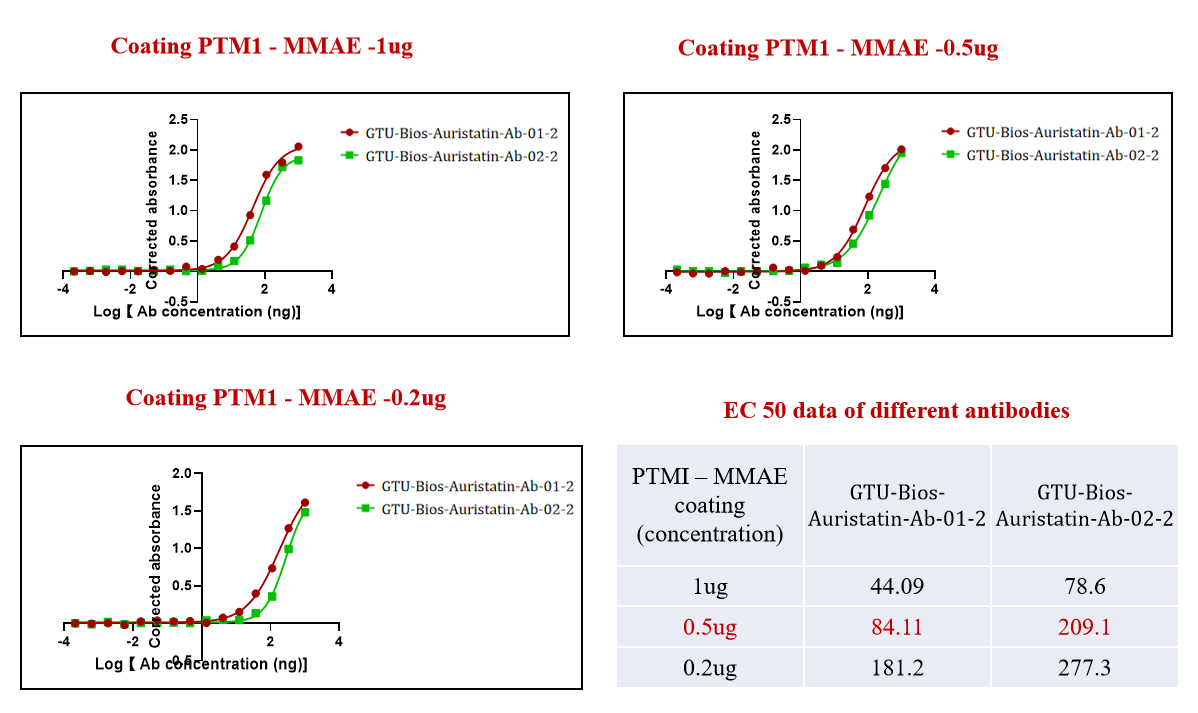
Figure 1. GTU-Bios-Auristatin-Ab-01-2 and GTU-Bios-Auristatin-Ab-02-2 have been actively bound with the ADC (PTM-1 MMAE).
Figure 1 demonstrates the efficacy of
GeneMedi's GTU-Bios-Auristatin-Ab-01-2
and GTU-Bios-Auristatin-Ab-02-2 in
actively binding with the ADC (PTM-1 MMAE). This underscores GeneMedi's
commitment to
producing
high-quality antibodies tailored for effective conjugation with MMAE-based ADCs.
The robust
binding
displayed in the figure highlights GeneMedi's expertise in developing antibodies
optimized
for
targeted drug delivery, a critical aspect in the field of antibody-drug
conjugates.
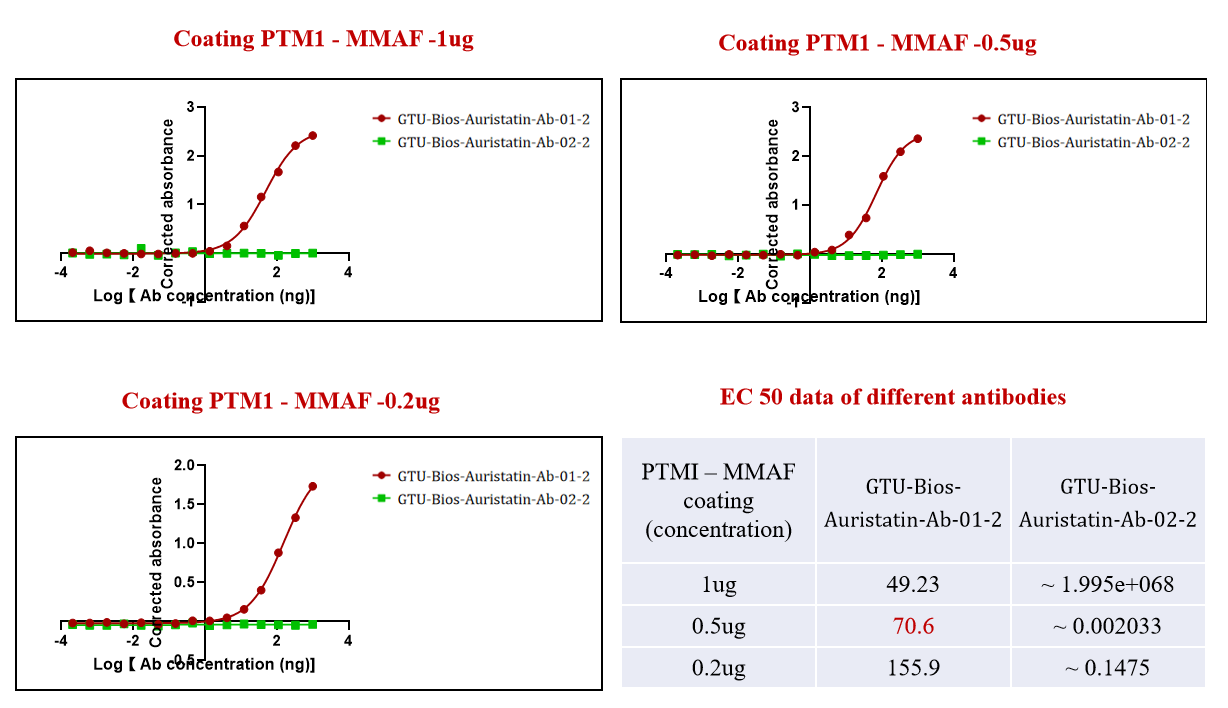
Figure 2. The GTU-Bios-Auristatin-Ab-01-2 has been actively bound with the ADC (PTM-1 MMAF). While GTU-Bios-Auristatin-Ab-02-2 has not been bound with the ADC with MMAF.
In Figure 2, the specificity of
GeneMedi's antibodies is showcased
as GTU-Bios-Auristatin-Ab-01-2 successfully
binds with the ADC (PTM-1 MMAF), while GTU-Bios-Auristatin-Ab-02-2 remains unbound. This
specificity
is
pivotal in ensuring precise targeting of MMAE-containing ADCs, enhancing their
therapeutic
efficacy
while minimizing off-target effects.
GeneMedi's ability to tailor antibodies to selectively
bind
with distinct drug payloads exemplifies their proficiency in antibody
engineering, offering
researchers reliable tools for precision medicine applications.
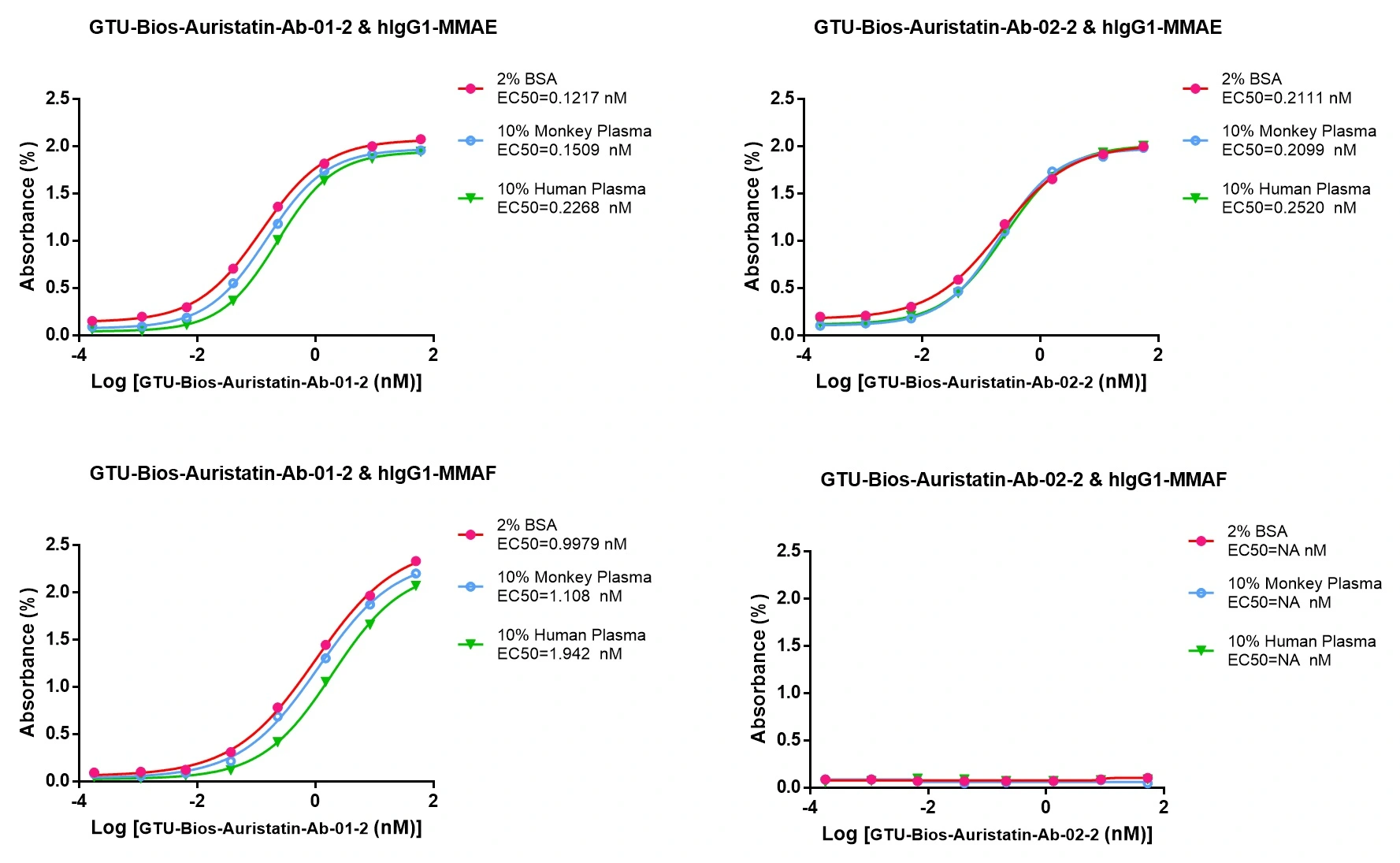
Figure 3. GTU-Bios-Auristatin-Ab-01-2 and GTU-Bios-Auristatin-Ab-02-2 can be used in pharmacokinetic (PK) studies involving humans and monkeys
GTU-Bios-Auristatin-Ab-01-2 has minimal impact in human and monkey PK studies and can be considered negligible. GTU-Bios-Auristatin-Ab-02-2 has even less impact than GTU-Bios-Auristatin-Ab-01-2 in these PK studies. Both GTU-Bios-Auristatin-Ab-01-2 and GTU-Bios-Auristatin-Ab-02-2 are suitable for use in human and monkey PK experiments.
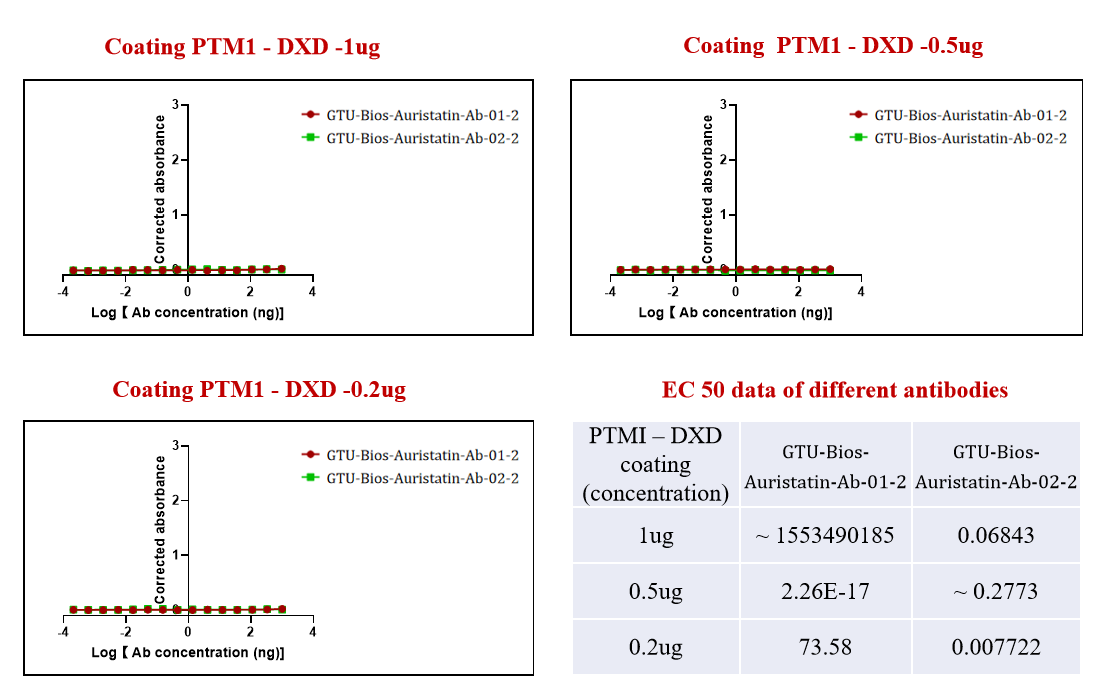
Figure 4. GTU-Bios-Auristatin-Ab-01-2 and GTU-Bios-Auristatin-Ab-02-2 have not been bound with the ADC conjugated with DXD.
Figure 4 illustrates another aspect of GeneMedi's antibody specificity, revealing that neither GTU-Bios-Auristatin-Ab-01-2 nor GTU-Bios-Auristatin-Ab-02-2 binds with the ADC conjugated with DXD. This data underscores GeneMedi's dedication to producing antibodies with high selectivity, ensuring minimal interference with undesired payloads.
By providing antibodies that exhibit minimal cross-reactivity, GeneMedi empowers researchers with precise tools for designing and optimizing ADCs for targeted cancer therapy, ultimately advancing the forefront of biomedical research and clinical applications.
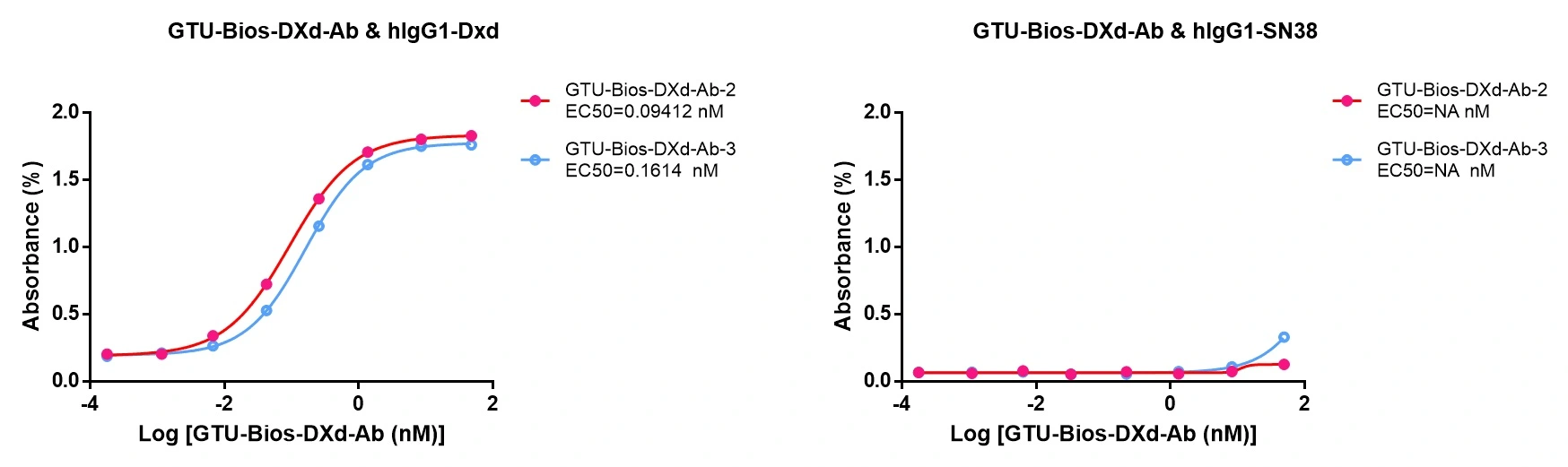
Figure 5. GeneMedi's GTU-Bios-DXd-Ab: Specific Binding with DXd, Not Binding with SN38.
GeneMedi's GTU-Bios-DXd-Ab exhibits specific binding to DXd-based ADCs, demonstrating its effectiveness. Moreover, it does not bind to ADCs conjugated with SN38, underscoring GeneMedi's commitment to producing highly selective antibodies.
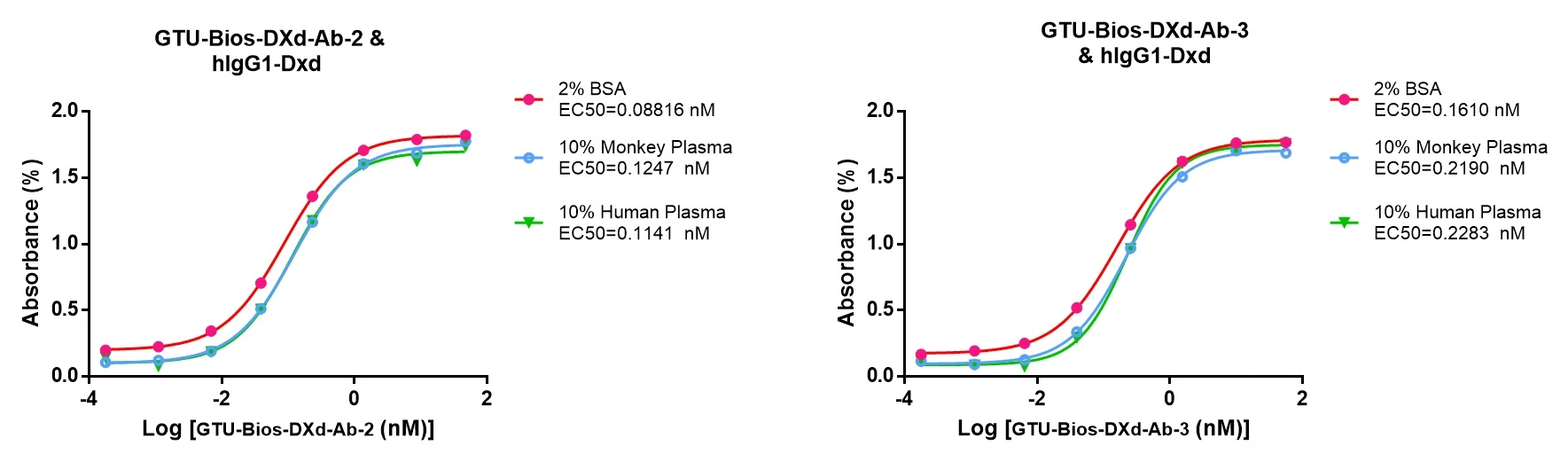
Figure 6. GTU-Bios-DXd-Ab has minimal impact on pharmacokinetic (PK) studies involving humans and monkeys.
GTU-Bios-DXd-Ab demonstrates minimal influence in PK studies with humans and monkeys, rendering it appropriate for application in these experiments.
GeneMedi의 항-엑사테칸 항체는 높은 특이성을 나타냅니다.
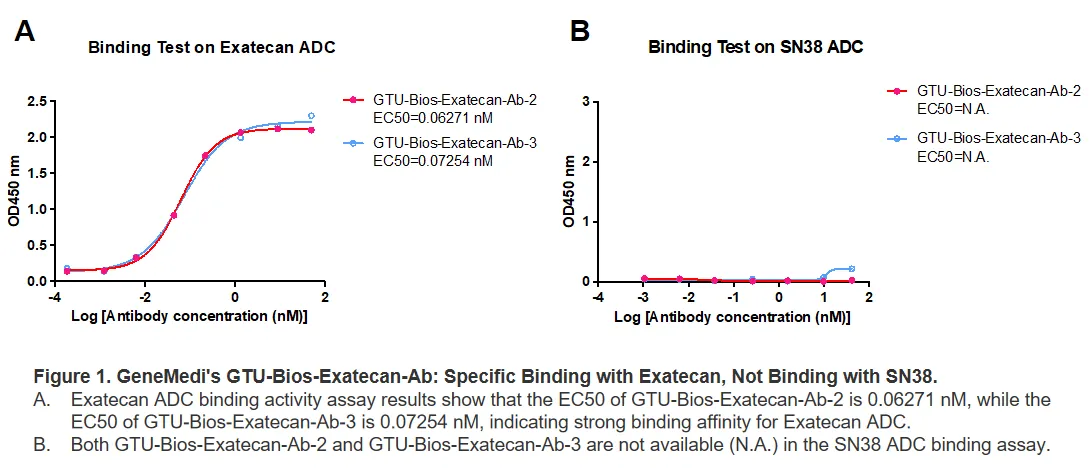
GeneMedi의 GTU-Bios-Exatecan-Ab은 엑사테칸 ADC에 대한 특이적 결합 친화력을 나타내며, 기능적 효능을 강조합니다. 또한, SN38-conjugated ADC에 결합하지 않는다는 점은 고선택적 항체 솔루션 개발에 대한 GeneMedi의 헌신을 강조합니다.
그림 1. GeneMedi의 GTU-Bios-Exatecan-Ab: 엑사테칸과 특이적 결합, SN38과는 결합하지 않음.
A. 엑사테칸 ADC 결합 활성 분석 결과, GTU-Bios-Exatecan-Ab-2의 EC50은 0.06271 nM이고 GTU-Bios-Exatecan-Ab-3의 EC50은 0.07254 nM로, 엑사테칸 ADC에 대한 강한 결합 친화력을 나타냅니다.
B. GTU-Bios-Exatecan-Ab-2과 GTU-Bios-Exatecan-Ab-3 모두 SN38 ADC 결합 분석에서 측정 불가(N.A.)입니다.
ADC에서 항-페이로드 항체의 전략적 사용
ADC 치료법은 '항-페이로드 항체'를 활용하며, ADC의 형성 및 발전에 사용되는 메커니즘과 근거는 상당히 다릅니다. 전통적으로 ADC는 화학 링커를 통해 세포독성 약물(페이로드)에 부착된 항체로 구성됩니다. ADC의 항체 부분은 암세포의 특정 항원에 결합하여 독성 부분을 이 세포에만 방출하고, 나머지 유기체에는 영향을 미치지 않으면서 암세포를 파괴합니다.
항-페이로드 항체는 특정 페이로드 분자에 단단히 결합하는 것으로 알려진 항체입니다. 이는 여러 목적으로 사용될 수 있습니다:
-
안전성 및 독성 관리:세포 구조에 특이적이며, 체내에서 비특이적으로 방출될 수 있는 유리 페이로드 분자에 결합하는 이러한 항체는 표적 외 독성을 줄여 ADC 치료를 더 안전하게 만드는 데 도움이 될 수 있습니다.
-
향상된 정밀성:이는 페이로드의 생체 분포 및 제거에 대한 지식과 함께 더 효율적이고 표적화된 ADC를 설계하기 위한 본질적 한계를 향상시키기 위한 연구에 사용될 수 있습니다.
-
약물 모니터링:구체적으로, 항-페이로드 항체의 존재를 측정하는 것은 개별 환자 요구에 따라 약물 용량을 조정하는 데 효과적으로 사용될 수 있는 분석법을 개발하는 데 도움이 됩니다.
이 개념이 아직 해당 분야에서 초기 단계에 있지만, 항-페이로드 항체를 생성하려는 시도는 건강에 미치는 영향을 줄이면서 암 치료의 효과를 향상시키는 목표로 ADC 기술의 다음 단계를 잠재적으로 향상시키고 있습니다.